The Creative Gap: Models Split on Writing
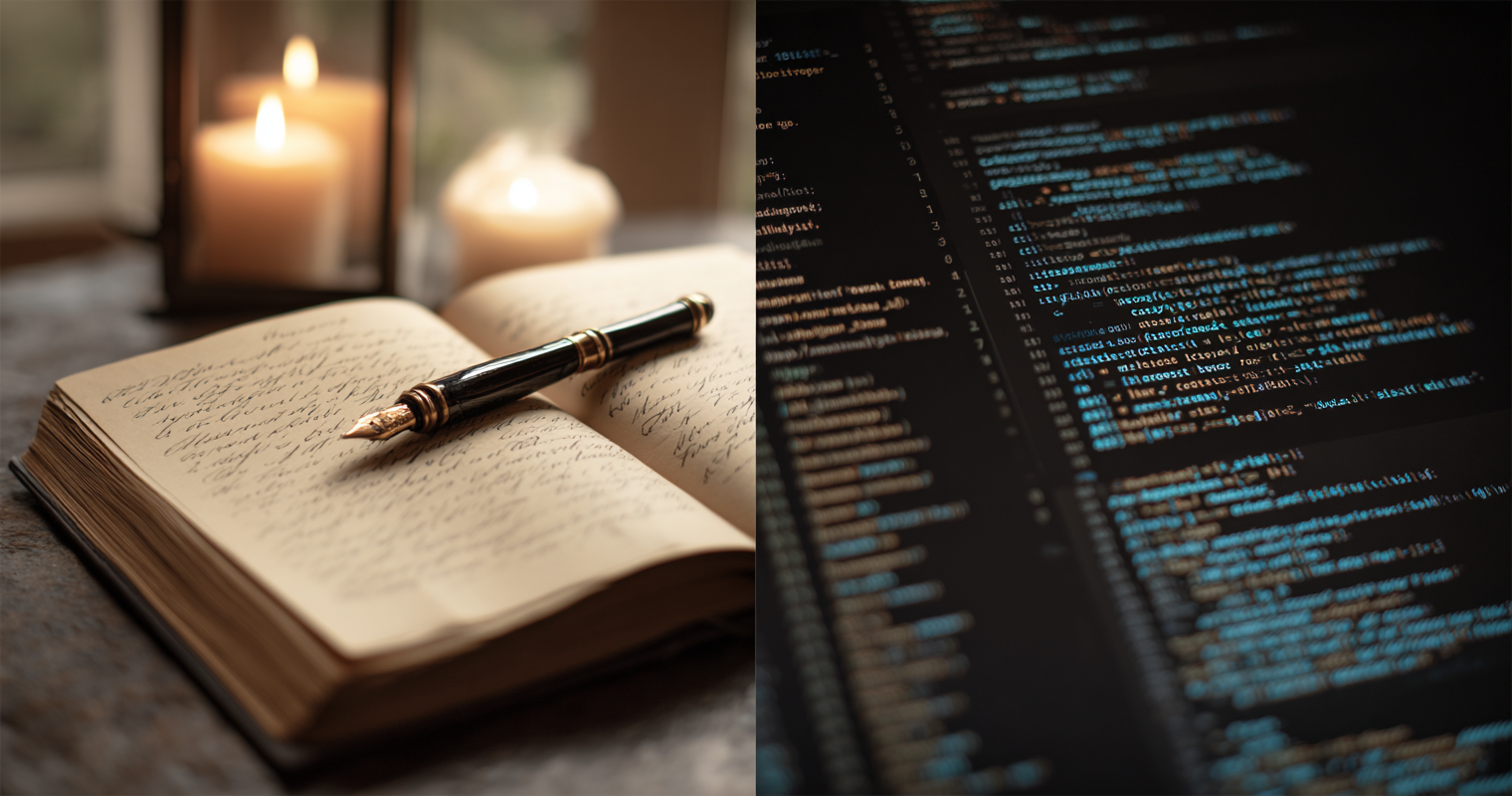
When we ran 10 models through 7 creative writing prompts in the AgentPulse v2.2 benchmark, the scores moved in ways that surprised me. Not because the top and bottom were unexpected, but because of where specific models landed relative to each other, and why.
Task prompts have right answers, or close enough. Write this email. Summarize this document. Plan this trip. A model can be objectively better or worse at those. Creative writing is different. There's no anchor. The model has to decide what good means, hold voice and structure and emotional truth in tension simultaneously, and make judgment calls with no rubric to check against. That's a fundamentally harder thing to measure, and it turns out to be a fundamentally different capability.
What the scores showed
The headline finding: Claude Sonnet 4.6 leads creative writing at 4.04, ahead of GPT-5.2's 3.94. That's a reversal. GPT-5.2 leads the task category at 4.61, a clear 0.27-point gap over Sonnet. But on the creative track, Sonnet pulls ahead. The model that wins on emails and planning loses on fiction.
Full creative rankings, from our 2026-02-26 run:
| Model | Creative Score | Task Score | Gap |
|---|---|---|---|
| Claude Sonnet 4.6 | 4.04 | 4.34 | -0.30 |
| Claude Opus 4.6 | 3.95 | 4.30 | -0.35 |
| GPT-5.2 | 3.94 | 4.61 | -0.67 |
| Kimi K2.5 | 3.73 | 4.44 | -0.71 |
| Gemini 3-Flash | 3.39 | 4.33 | -0.94 |
| Gemini 3.1 Pro | 3.39 | 4.55 | -1.16 |
| DeepSeek V3.2 | 3.27 | 4.0 | -0.73 |
| Grok 4.1 Fast | 2.96 | 4.0 | -1.04 |
| Qwen3-Max | 2.87 | 4.07 | -1.20 |
| Mistral Large | 2.67 | 3.76 | -1.09 |
Every model drops from task to creative. The question is by how much, and whether that drop reflects capability or design.
The Qwen case
Qwen3-Max has the largest task-to-creative gap in our dataset: 1.20 points. That's not a small rounding difference. It's the distance between "genuinely good" and "struggles with this format."
But here's the thing: Qwen's unreliable narrator story, "Portland Rain," is one of the most technically interesting pieces in our dataset. A man who believes he's being a caring neighbor to a woman in distress. The reader gradually understands he's a stalker. The gap between the narrator's self-perception and the reader's horror is sharp and handled with genuine craft.
It scored low on our rubric because of word count and constraint violations. Qwen didn't follow the instructions tightly enough. But the literary instinct behind that story is real.
Alibaba designed Qwen3-Max for business and technical tasks. The score gap isn't a failure. ByteDance's Doubao models follow the same pattern — optimized for production cost-efficiency, not creative output. It's a legible consequence of intentional design choices.
Style divergence, not just score divergence
The more interesting pattern across models isn't the gap itself. It's how Chinese and Western models approach the same creative prompts differently.
Our benchmark's unreliable narrator prompt produced five distinct responses with five distinct aesthetic strategies. DeepSeek's "The Last Frame" is a projectionist at a rural drive-in, watching Apollo 11 on the screen while the film burns unattended behind him. It's meditative and philosophically layered. The meaning accumulates through setting and silence rather than through psychological tension. Kimi's "Bar Harbor" has a narrator who lovingly tends to his dead sister's preserved corpse, believing it's a form of devotion. Disturbing in exactly the right way.
Compare those to Claude's "The Levee," set during Hurricane Katrina, where silence carries the weight of everything that happened and everything left unsaid. Or GPT's "Père Lachaise," a narrator addressing a dead woman named Claire, his grip on reality fracturing in real time.
Western models tend toward distorted-perspective unreliability: the narrator's interpretation is wrong, and you figure it out through psychological cues. Chinese models tend toward hidden-truth unreliability: the reader discovers what actually happened through accumulating symbolic detail. Neither is objectively better. They're different aesthetic traditions.
Our rubric carries Western literary preferences. Psychological ambiguity and distorted perspective score higher in our framework than hidden-truth revelation and philosophical clarity, which means the Chinese model scores likely understate actual quality for readers who value those aesthetics.
What this means if you build with AI
The practical split is cleaner than the scores suggest.
For long-form content, editorial writing, or anything requiring brand voice consistency, Claude Sonnet 4.6 is the right call. Its creative judgment under ambiguity is the strongest in the benchmark, and the 4.04 score is built on consistently good decisions across seven different prompts, not a single impressive piece.
If you're generating creative content at volume, DeepSeek V3.2 changes the math. A 3.27 creative score at $0.015 per run, compared to Sonnet's 4.04 at $0.49 — numbers you can cross-reference in our full model cost map — means you're paying 33 times more per run for a 0.77-point quality difference. For high-volume use cases where you're generating product descriptions, variations, or first drafts, DeepSeek is a serious option.
For thematic, symbolic, or philosophically layered content, DeepSeek and Kimi have genuine strengths that our scores underrepresent. If your audience cares about meaning that accumulates rather than tension that resolves, test those models directly.
Don't use Qwen3-Max for creative work. Not because it's incapable, but because it's optimized for something else. The "Portland Rain" story is evidence that the underlying model has real creative instincts. The scores are evidence that creative writing isn't where those instincts get applied reliably.
Mistral Large at 2.67 doesn't have a design-intent excuse. The outputs just aren't there.
Frequently Asked Questions
Why does Claude Sonnet 4.6 beat Claude Opus 4.6 on creative writing?
Our data shows Sonnet 4.6 at 4.04 versus Opus 4.6 at 3.95, a 0.09-point gap across 7 creative prompts. This is within noise range for a single benchmark run. What we can say is that Sonnet's creative performance is at least competitive with Opus, which matters for cost decisions: Sonnet runs at $0.49 per full benchmark run versus Opus at $0.82.
Does a lower creative score mean the model writes worse fiction?
Not exactly. Our rubric rewards specific things: prose craft, psychological complexity, emotional architecture, instruction-following. A model that writes excellent philosophical fiction using a different aesthetic tradition may score lower on criteria designed around Western literary conventions. The Qwen "Portland Rain" example demonstrates this directly: compelling craft, low score due to constraint violations. Always read outputs, not just scores.
Is it worth running multiple models and selecting the best output?
For creative content where quality matters: yes. DeepSeek at $0.015 per run means you could generate three or four versions for less than a single Sonnet run, then select or blend. The ceiling on multi-model generation is often higher than any single model's average, because you're selecting from a distribution rather than accepting one output.
The real question this data raises: if aesthetic tradition shapes what the rubric rewards, how many benchmarks out there are measuring something narrower than they claim?
Data source: AgentPulse benchmark v2.2, 2026-02-26 run, 10 models, 7 creative prompts (prompts 22-28). Tested via OpenRouter. Methodology open-source.